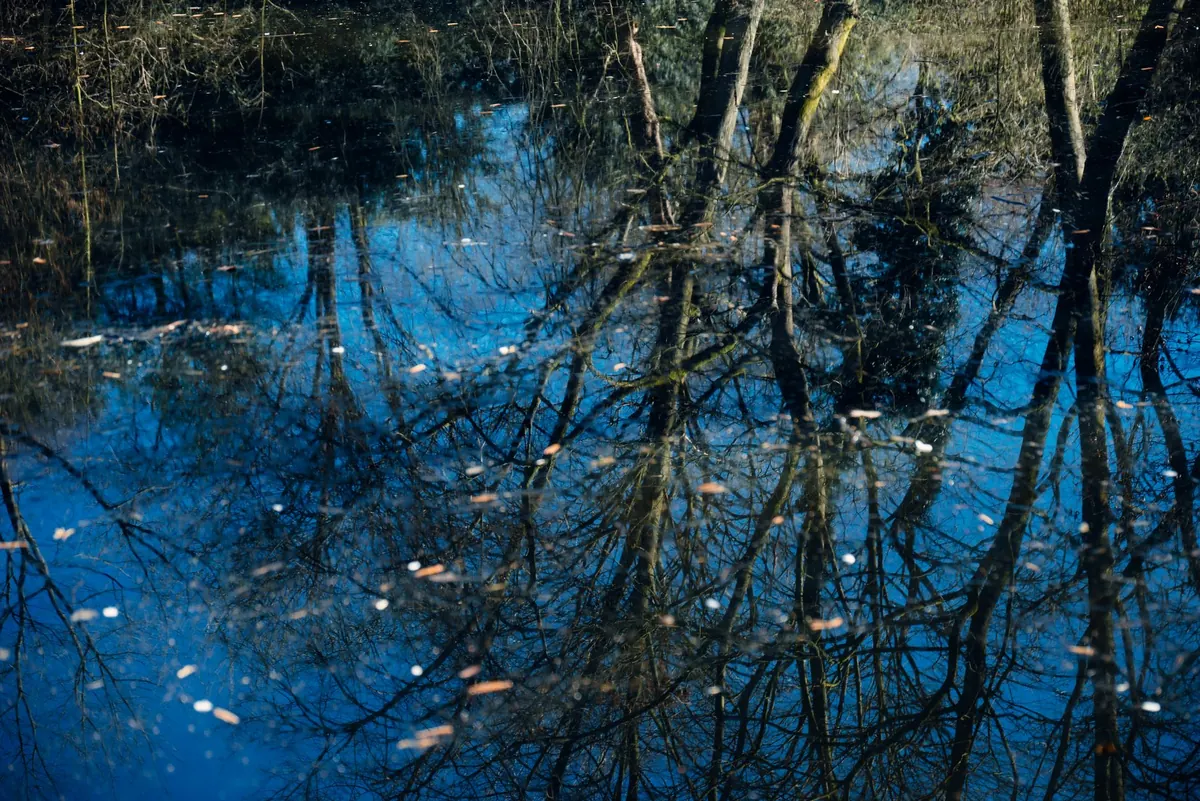
The first time you find a vernal pool, you may not realize you've found anything at all. In late summer it looks like a shallow, leaf-filled hollow in the woods, the kind of place you step over without a second thought. Then the snow melts, the spring rain arrives, and that same hollow is suddenly full of dark water, quacking frogs, and jelly.
Vernal pools are small wetlands that dry out for part of most years. That one fact shapes everything about them: the species that breed there, the way biologists look for them, and the way the law sometimes forgets them entirely. Here's what they are, why they matter, and how to know one when you're standing in front of it.
What Makes a Vernal Pool a Vernal Pool
The word comes from the Latin for spring, but a vernal pool isn't defined by a date on the calendar. It's defined by water. A true vernal pool holds water for weeks or months, then goes dry — sometimes by midsummer, sometimes by fall, depending on the year and the site.
Three things usually go together:
- No permanent connection to another water body. No stream flows in, none flows out. The pool fills from snowmelt, rain, and a rising water table, and it drops by evaporation and seepage into the ground.
- Fish can't survive there. Because the basin dries, and because fish have no way to swim in, a pool that holds fish year-round isn't a vernal pool in the ecological sense.
- A dry phase that matters. The empty season isn't a failure. It's the mechanism that keeps the pool fish-free and resets the cycle of decomposition and nutrients.
People use the term loosely. In forests of the Northeast and Midwest, "vernal pool" is the common name. In the West, similar temporary wetlands may be called seasonal pools, and California's grassland vernal pools support a whole separate community of native plants and crustaceans. The underlying idea — a small, isolated, temporary wetland — is the same.
It isn't just a swamp that dried up
Marshes and swamps typically stay wet all year and are connected to groundwater or surface flow. A vernal pool is a discrete basin, often no bigger than a parking space, sometimes the size of a tennis court. Many sit in woods, but they also occur in meadows, on rocky ridges, and in old farm fields.
Why Fishless Water Matters
Fish eat amphibian eggs and larvae. Take fish out of the equation and a temporary pond becomes one of the safest nurseries in the forest.
Biologists talk about hydroperiod — how long a pool holds water. That length of time sets the schedule. Wood frogs can lay eggs, hatch, and get tadpoles out of the water in a few short weeks, so they thrive in shallow pools that dry early. Spotted salamander larvae need water well into summer to complete metamorphosis, so they need deeper basins. A single landscape with pools of different depths and drying times supports more species than a uniform one.
A vernal pool is not a lesser wetland. It's a different one — and the dry season is the whole point.
The Creatures That Depend on Them
Some animals are considered obligate vernal pool breeders: they rely on these fishless temporary wetlands for most or all of their reproduction. Others use them when they're convenient. The obligate list includes wood frogs, spotted salamanders, the blue-spotted and Jefferson salamander complex, marbled salamanders (which breed in autumn as basins refill), and fairy shrimp.
Fairy shrimp are worth knowing. These small, translucent crustaceans swim upside down, filter particles from the water, and appear in cool early-spring pools. Their eggs can survive a dry, frozen basin and hatch when water returns. No fish, no problem.
The supporting cast is just as interesting: fingernail clams, caddisfly larvae, predaceous diving beetles, water fleas, copepods, dragonfly nymphs, spring peepers, American toads, and four-toed salamanders, which often nest in moss at the pool's edge. In many regions, these small wetlands produce a large share of the amphibians in the surrounding forest.
How to Identify a Vernal Pool in Spring
You don't need equipment to confirm a pool, though a notebook and a flashlight help. Go out on a mild, rainy evening in early spring, or a sunny morning a few days after one.
- Listen first. Wood frogs sound like a small flock of ducks arguing — a rolling, quacking chorus. Spring peepers give a high, rising peep. American toads trill for long stretches. If the pool is loud, you're in the right place.
- Look for egg masses. Wood frog masses are soft, rounded, grapefruit-sized blobs attached to submerged twigs, often clustered together. Spotted salamander masses are firmer and fist-sized, milky white or greenish inside. Toads lay long strings of eggs wound through vegetation.
- Check the water. Vernal pool water is often dark, stained brown by leaves, and still. No current, no riffles.
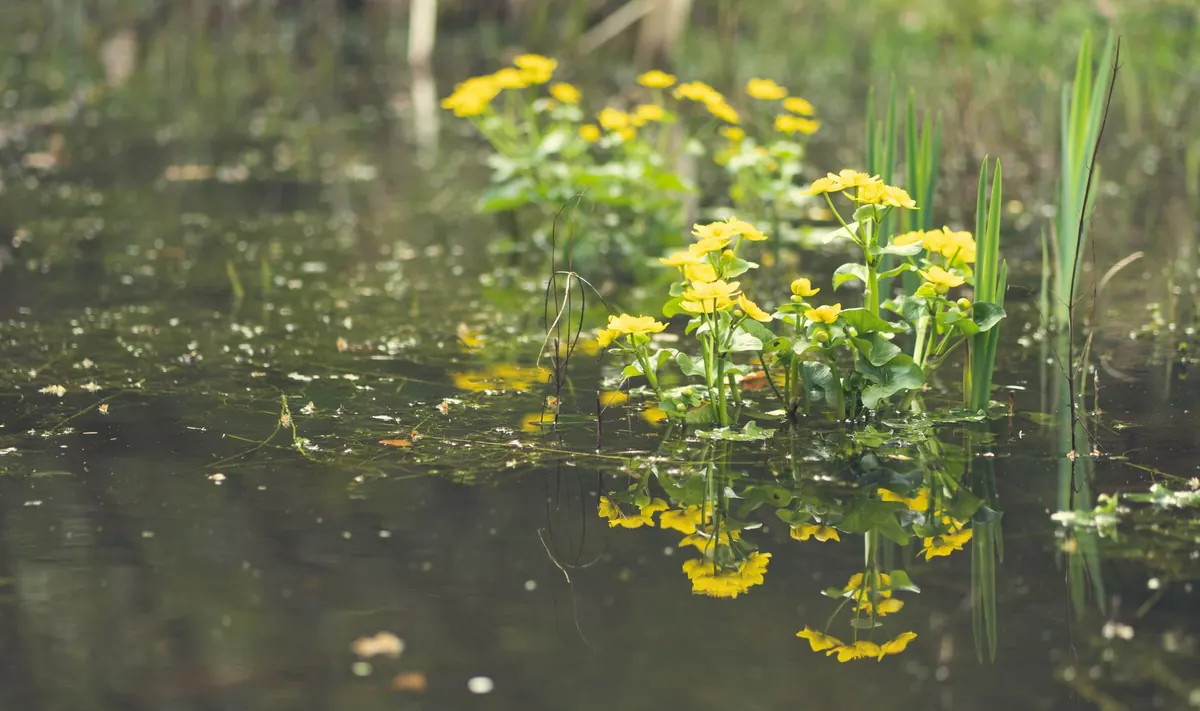
- Read the basin. Look for a defined depression with no inlet or outlet channel. Leaf litter, sphagnum moss, buttonbush, highbush blueberry, and cinnamon fern are common around them.
- Look for last year's evidence. Dried algae lines on tree trunks, a ring of matted leaves, or cracked mud in late summer all point to a pool that fills and empties.
If you visit in July and find a dry, leafy hollow with wetland plants growing in it, that's not a disappointment. That's confirmation.
What a Pool Needs Beyond Water
A vernal pool is only half the habitat. The other half is the upland forest around it. Spotted salamanders spend most of the year underground in burrows and under logs, often within a few hundred feet of the pool where they were born. Wood frogs overwinter in leaf litter in the woods. On the first warm rainy nights of spring, they migrate — sometimes across roads, which is where a lot of them die.
That means protecting a pool without protecting the surrounding forest doesn't accomplish much. Coarse woody debris, deep leaf litter, and an intact canopy all matter. So does leaving fallen logs where they are.
Why Small Wetlands Slip Through the Cracks
Vernal pools are easy to miss on a map and easy to overlook in a permit review, especially when the inspection happens in August and there's nothing there but mud. They get filled for driveways, ditched for drainage, or degraded when surrounding woods are cleared. Invasive plants can change the vegetation and shade the basin. Off-road vehicles tear up the shorelines. A warming climate with earlier snowmelt and more erratic rainfall may shorten hydroperiods in many places, leaving larvae stranded before they metamorphose.
In some states and provinces, pools that meet specific criteria can be mapped and given legal protection. In others, a small wetland that's dry half the year gets very little scrutiny. If you think you've found one on land slated for development, contact your state or provincial wildlife agency or a local land trust — they can tell you what applies where you live. This isn't legal advice, and rules vary widely, but those offices are the right first call.
Visiting Without Loving It to Death
Vernal pools are fragile in ways that aren't obvious. The same isolation that keeps fish out means a single introduction can change everything.
- Stay on the edge. Wading stirs up sediment, crushes egg masses, and muddies the water.
- Don't move egg masses, tadpoles, or shrimp between pools, and never release fish, turtles, or aquarium plants into one.
- Clean mud and water off your boots and gear before visiting another wetland. Disease organisms and invasive seeds travel on wet soles.
- Keep dogs out during breeding season, and leave logs, branches, and leaf litter alone.
- Log what you see. Photos, dates, and locations are genuinely useful — many regions run volunteer mapping or certification programs that accept observations from the public.
The best thing you can do for a vernal pool is often the simplest: notice it, visit it gently, and tell someone it's there.
Photo: Ramon Karolan / Pexels