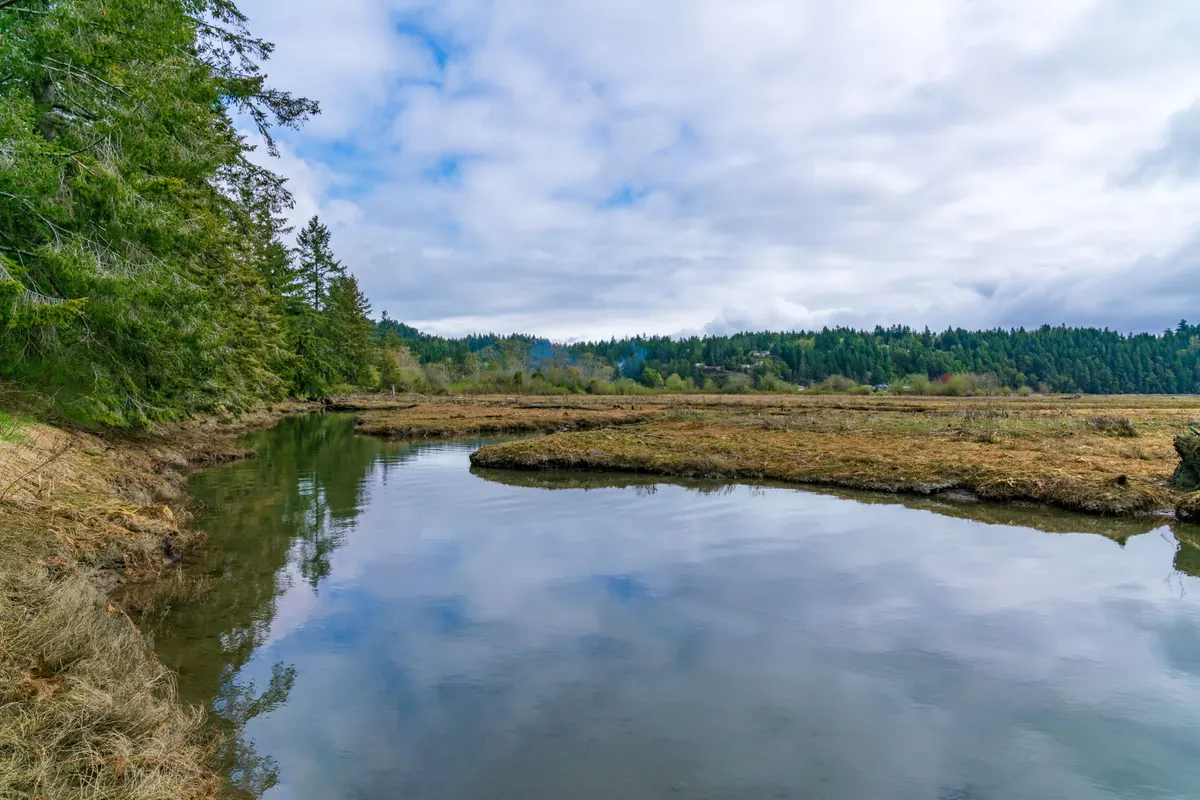
A Pacific Northwest wetland is not the same place twice. In February, a marsh that looked like flat brown water last August is loud with ducks, swans and the first chorus frogs of the year. By June it has become a green wall of cattails humming with dragonflies, with rails and bitterns hidden somewhere inside it.
What follows is a practical guide to the wetland species you are most likely to meet in Washington, Oregon and southern British Columbia, along with the seasons and the specific places that improve your odds.
Herons, Cranes and Swans: The Big, Obvious Magic
Start with the birds you can identify without binoculars. Great blue herons stand year round in the shallows of almost every marsh, estuary and pond edge in the region, motionless for minutes at a time before striking at a fish. In spring they nest in colonies, sometimes dozens of pairs in tall trees near water — the heronry at Ridgefield National Wildlife Refuge in Washington and the one at Vancouver's Jericho Beach are both visible from maintained trails. Watch nesting herons from a distance; a disturbed colony is an abandoned colony. A heron is a patient bird, and the reward for matching its patience is usually a good look at a nest exchange.
Sandhill cranes pass through rather than stay. Spring is the main movement, roughly March into April, when family groups and loose flocks work north over the Columbia Basin and up the coast. They call constantly in flight, a rolling bugle that carries a long way, so listen overhead as much as you scan. The Othello Sandhill Crane Festival, held each March in eastern Washington, and comparable events in the Willamette Valley, are a good excuse to plan a trip around the migration rather than hoping to stumble into it.
Swans are the winter headliners. Trumpeter swans settle into the Skagit Valley and the Fraser delta from November through February, feeding in stubble fields and shallow water. Tundra swans are more common in the Willamette Valley and the Klamath Basin, often in tighter flocks. Both are best seen in the first hour of daylight, when the fields still hold overnight birds before they shift to water.
Telling them apart in the field
- Heron or crane in flight: a heron folds its neck back into an S shape; a crane flies with the neck stretched straight out and legs trailing behind.
- Trumpeter or tundra swan: trumpeters are larger with an all-black bill; tundra swans usually show a small yellow spot at the base of the bill and often feed shoulder to shoulder in groups.
- Crane or goose: cranes are taller and slimmer than Canada geese, with a shaggy bustle of feathers over the tail that geese do not have.
Winter Waterfowl: The Best Months to Watch Ducks
From November through February, regional wetlands hold their greatest variety of waterfowl. Northern pintails, American wigeon, mallards, green-winged teal and ring-necked ducks dabble in the shallows, tipping tail-up to reach submerged plants, while buffleheads and hooded mergansers dive in deeper water and sit lower on the surface. Add common goldeneyes, canvasbacks and the occasional Eurasian wigeon, and a single morning at a good refuge can turn up fifteen or more species without much effort.
Snow geese crowd the fields of the Skagit and Fraser deltas, sometimes in flocks of thousands, and the sound of an entire field lifting at once is one of the region's great winter experiences. Look for the dark-morph "blue" geese mixed in among the white ones; they show up regularly in these flocks and are easy to overlook until you train your eye on the darker birds.
Timing matters more than location. Arrive at first light or come back for the last hour before dark, when birds move between roosts and feeding areas. A cold snap that ices over smaller ponds will concentrate everything into whatever open water remains, which can turn a quiet marsh into a spectacle. Bring a spotting scope if you have one — many refuges are managed so birds sit at a distance, and a scope turns a distant raft of ducks into identifiable individuals.
Small Birds, Big Voices
The most rewarding wetland birds are the ones you hear first. Marsh wrens rattle and trill from deep inside cattails, brown on brown and almost impossible to spot until one pops up to scold you. Virginia rails and sora squeeze through the reeds like mice, more often detected by their grunts and whinnies than by sight — the sora's descending whinny and the Virginia rail's sharp kid-ick are worth learning before you go. American bitterns take the opposite approach: caught in the open, they freeze with the bill pointed skyward and trust the vertical stripes.
Red-winged blackbirds return to cattail tops in late winter, males flashing red shoulders while females skulk below. East of the Cascades, watch for yellow-headed blackbirds in summer, which nest over deeper water than red-wings and deliver one of the strangest songs in the region. Common yellowthroats chatter from low willow edges, and a good morning in May can turn up a dozen warbler species moving through the same brush.
The technique for all of these is the same: pick a dry spot, stand still for ten minutes, and let the marsh forget you are there. Birds that vanish the moment you arrive often reappear within a few minutes if you simply stop moving and stop talking.
Pishing and a few soft clucks will sometimes pull a rail to the edge of the reeds — but only if you have already been standing quietly long enough to seem like part of the scenery.
Mammals You Will Probably Hear Before You See
Beavers work the evening shift. Look for freshly chewed sticks with visible tooth marks, mud slides into the water, and lodges built up against a bank. Stay put at dusk and you may hear the flat slap of a tail on water, the alarm that tells you the whole pond knows you have arrived.
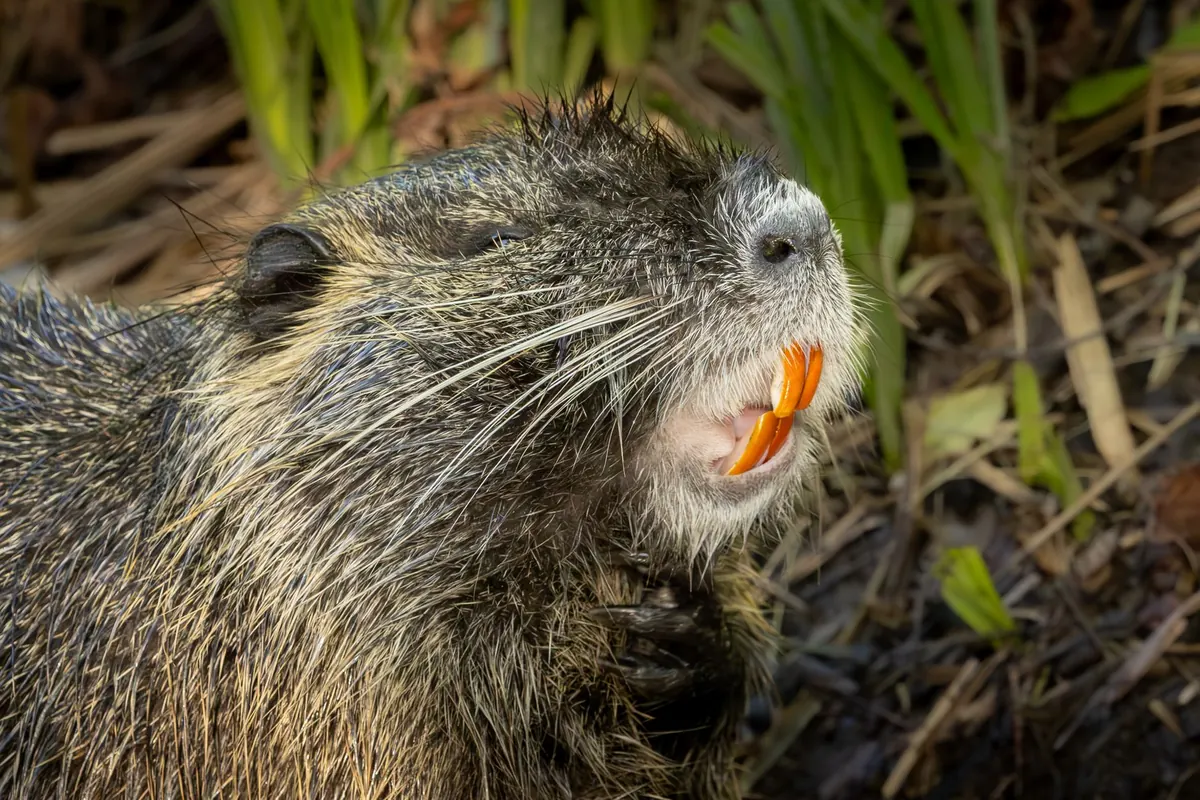
Muskrats are the daytime swimmers, smaller and browner than a beaver, pushing a neat V-shaped wake across open water. Their lodges are bundles of cattail and mud rather than logs, and they are active year round — a muskrat pushing along a half-frozen channel in January is a common and cheering sight.
River otters are faster and more playful, common in estuaries and along larger rivers, where they slide down muddy banks and roll in the water for no obvious reason. They are most often seen in the hour after sunrise. Black-tailed deer browse the edges at dawn, and coyotes patrol the same paths, so a wetland at first light can feel considerably less empty than it looks at noon.
Frogs, Turtles and the Summer Crowd
By March the amphibians take over the soundtrack. Pacific chorus frogs — the small tree frogs whose call most people already know from nature documentaries — begin calling before the last frost, sometimes from a pond still edged with ice. Their kreck-ek chorus, hundreds of voices at once, is the sound of the region's early spring.
Northern red-legged frogs breed in the same season but are quieter and far more secretive, laying big gelatinous masses of eggs in shallow water. They are a species of concern across much of their range, so give egg masses a wide berth and never wade through the shallows where you find them. Western pond turtles, among the rarest reptiles in the region, bask on logs in a handful of protected wetlands; if you find one, watch it from a distance and report the sighting to the managing agency.
Summer belongs to the insects. Dragonflies and damselflies emerge in June and peak in July, patrolling the cattails in the company of mosquitoes, which is precisely the point. Watch for the blue-eyed darner on its fast, straight patrols and the smaller eight-spotted skimmer perched on emergent stems. A warm afternoon, binoculars and some patience are all you need.
Where to Go: A Short List of Reliable Wetlands
Almost any pond will give you a heron and a few mallards. These sites give you more, and most of them sit within an hour of a major city.
- Ridgefield National Wildlife Refuge, Washington: a driving loop through marsh and bottomland forest, excellent for herons, waterfowl and spring sandhill cranes.
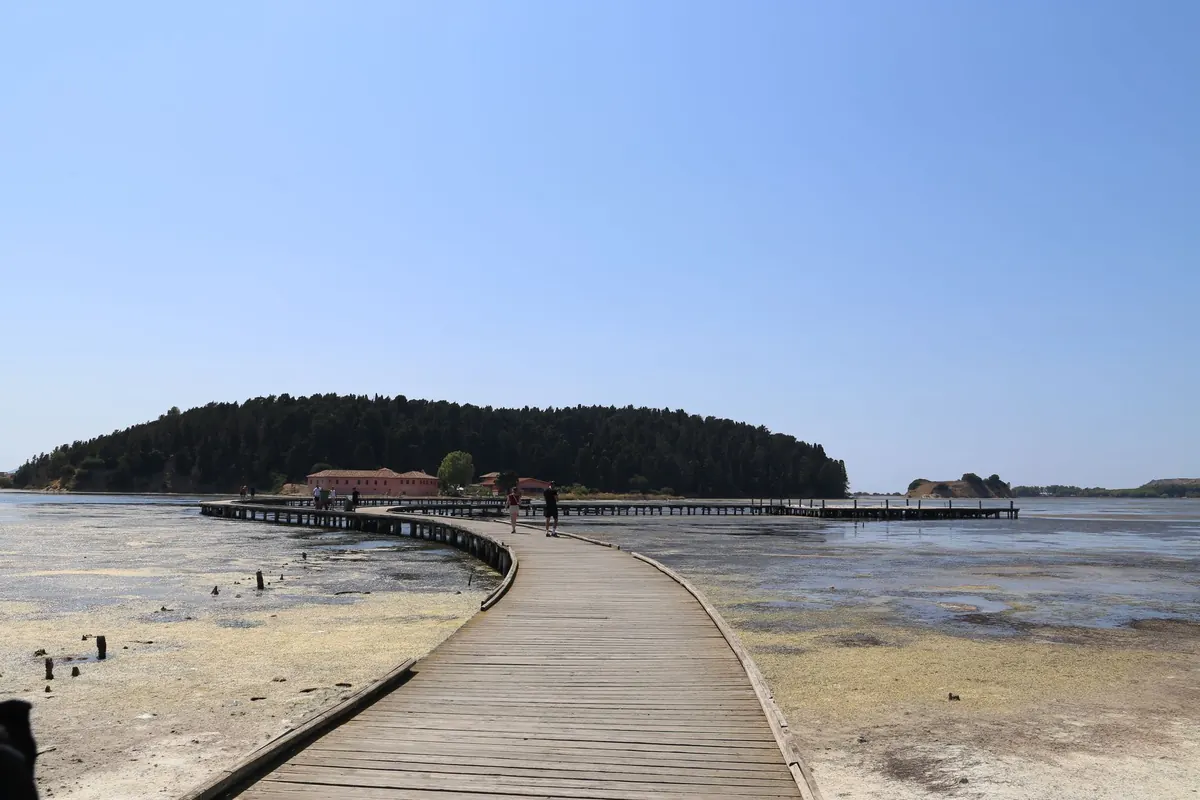
- Billy Frank Jr. Nisqually National Wildlife Refuge, Washington: a boardwalk out into the Nisqually delta, with wintering waterfowl, raptors and a strong chance of river otters.
- Skagit Wildlife Area and Fir Island, Washington: the traditional winter stronghold for snow geese and trumpeter swans, best from November to February.
- Sauvie Island, Oregon: waterfowl in winter and sandhill cranes in fall, with several wildlife areas along the main road.
- Fernhill Wetlands, Forest Grove, Oregon: small, accessible and productive — good for herons, waterfowl and songbirds without a long drive.
- Reifel Migratory Bird Sanctuary, Delta, British Columbia: trails, viewing towers and enormous numbers of wintering ducks and geese on the Fraser delta.
- Klamath Basin refuges, Oregon and California: the largest concentration of waterfowl in the region, and worth the trip if you want scale, bald eagles and tundra swans in a single landscape.
Two habits make every one of these places better. Check hunting seasons before you go, because several of these areas allow waterfowl hunting in fall and winter and you will want to know whether to wear orange or visit a closed unit instead. And stay on trails and boardwalks: wetland soils are fragile, and a shortcut through the cattails can crush nesting cover that took a whole season to grow.
Photo: JOHN CALLERY / Pexels