A shallow pond fringed with cattails appears behind a new housing development. Ten miles away, a marsh has been wet since the last glacier pulled back. Both hold water. Both pull in red-winged blackbirds and green frogs by the dozen. So which one is better for wildlife? The honest answer starts with a question of your own: better at what, for which species, and over how long?
What "Better" Actually Means
Natural and constructed wetlands are not two versions of the same thing, and treating them as rivals muddies the decision. A treatment cell built to strip nutrients from subdivision runoff and a restored sedge meadow fed by groundwater are doing different jobs. They will be judged by different standards.
Before comparing, name your goal. Are you trying to support breeding amphibians, provide migration stopover for waterfowl, clean water leaving a farm field, or add acreage to a conservation corridor? Those goals pull design in different directions. A wetland that is superb for one can be mediocre or even harmful for another.
Once the goal is clear, four measures do most of the useful work: biodiversity support, habitat value for a target species, resilience to drought, floods and storms, and the long-term cost of keeping it functioning. Compare on those, and the answer usually becomes obvious.
Natural Wetlands: Complexity You Can't Build Overnight
A natural wetland is a record of thousands of small events. Hummocks and hollows, mudflats that dry in July and refill in November, rotting logs, layers of peat, a seed bank built from decades of plants that succeeded and failed on that exact spot. That lumpy, unpredictable structure is the habitat.
Species with narrow requirements depend on it. Amphibians that need fishless pools with a particular dry-down timing, marsh birds that need large unbroken stands of sedge, specialist invertebrates tied to one or two host plants—these animals persist in natural wetlands because the conditions they need show up reliably, year after year.
Natural does not automatically mean healthy. Plenty of wetlands have been ditched, drained, cut off from their floodplain, or overrun by reed canary grass and phragmites. A "natural" wetland in a degraded watershed can hold less wildlife than a well-built pond down the road. Condition matters more than origin.
Constructed Wetlands: Built With a Job in Mind
The category covers a wide range: stormwater basins, wastewater polishing cells, agricultural runoff wetlands, mitigation sites, duck club ponds, and the simple two-acre scrape a landowner digs to hold spring water. Design intent shapes everything that follows.
A basin engineered purely for peak flow attenuation—steep banks, concrete outlet, one species of cattail—offers little. Regrade the same site with gentle slopes, shallow shelves, a couple of islands, scattered coarse woody debris and plugs of native emergent plants, and the wildlife response changes within a season or two.
Construction also gives you control that nature does not. You can set water depth, decide where the mudflat will appear as levels drop, and build in a fish barrier to keep a breeding pool free of predators. Used well, that control is a genuine advantage. Used carelessly, it produces a sterile ditch with a fence around it.
Biodiversity: Where the Comparison Gets Interesting
What natural wetlands usually hold
Depth, age and connectivity add up. Older wetlands carry more microhabitats, more invertebrates at the base of the food web, and more species that specialize. They also sit inside a landscape—linked to streams, uplands and other wetlands—so animals can move between them when one dries out.
Where constructed wetlands shine
Colonization is fast. Dragonflies, backswimmers, chorus frogs and mallards find new water quickly, often within a year or two. In a landscape of drained fields and parking lots, a constructed wetland may be the only open water for miles, and it becomes a stepping stone for migrating birds and dispersing amphibians. That is real conservation value, even if the species list is mostly generalists.
The gap narrows further when constructed wetlands are built in clusters, with varied depths and hydroperiods, and when they are left alone long enough to develop vegetation structure. Time does much of the work—if maintenance does not keep resetting the clock.
Maintenance: Two Very Different Kinds of Work
Natural wetlands are low-effort when their watershed is intact. When it is not, someone has to control invasives, restore hydrology, manage beaver activity and keep agricultural buffers in place. The work is unpredictable but usually light.
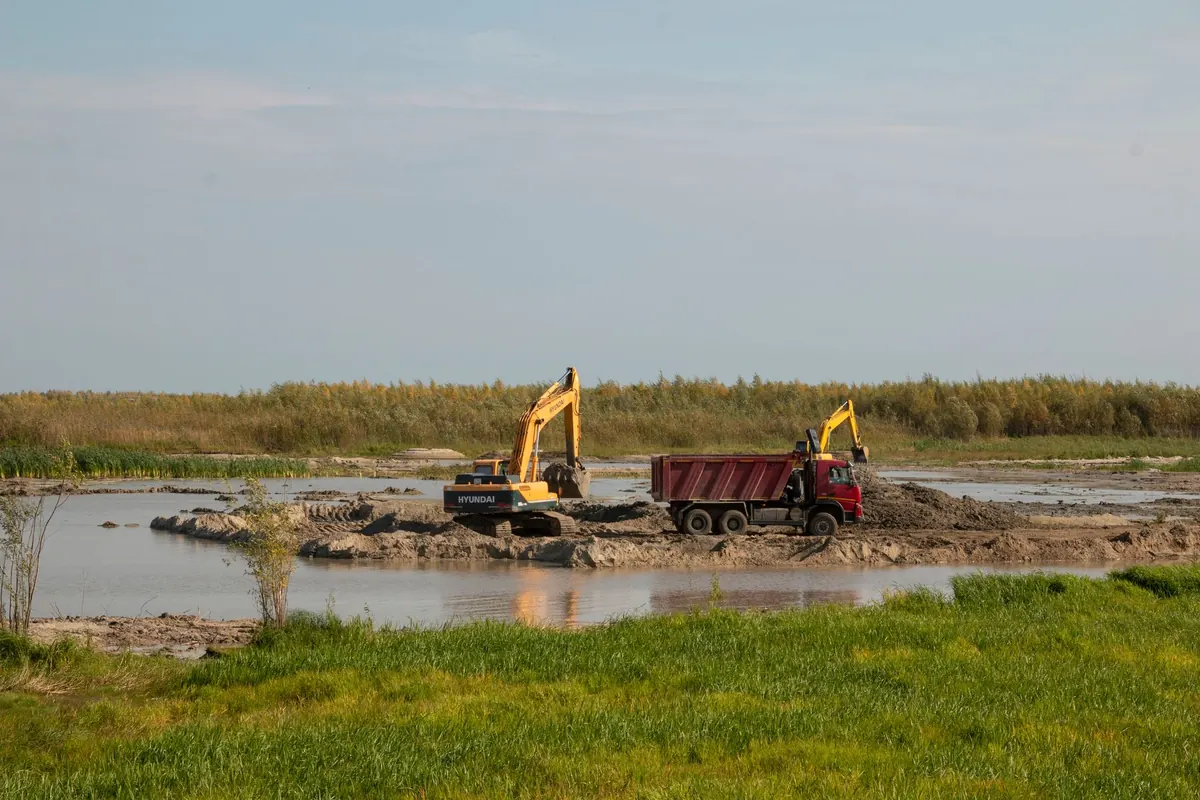
Constructed wetlands carry a maintenance schedule from day one. Expect sediment forebays to empty, outlets to clog, embankments to be inspected, vegetation to be harvested or mowed, and the whole basin to be dredged eventually. Nutrient-retention wetlands accumulate phosphorus and nitrogen in their soils and sediments, and their performance declines over time unless material is removed. Budget for that cycle before you break ground, not after the first clog.
Practical Steps Before You Dig or Protect
- Write the goal down. One sentence. "Provide fishless breeding habitat for wood frogs" leads to a different design than "treat runoff from 40 acres."
- Read the hydrology, not just the soil. Where does water come from, where does it go, and how does the level change across a year? A wetland with no reliable water source becomes a weed patch.
- Check what is already nearby. If a functioning natural marsh sits a quarter mile away, restoration or buffering may deliver more than new construction.
- Design for edges and depths. Shallow shelves, mudflats, islands and uneven bottoms create more habitat than a uniform bowl.
- Plan the money and the labor. Who clears the outlet in ten years? Who pays for dredging? If nobody can answer, the project is not finished.
- Be patient. Give a new wetland three to five growing seasons before judging it. Track what actually shows up rather than what the plan promised.
The Short Answer
Protect and restore natural wetlands first. Their complexity cannot be manufactured, and the species that depend on it have nowhere else to go. Then use constructed wetlands where they earn their place: to treat water, to replace function that was destroyed, and to add habitat in landscapes that have almost none.
Judge both the same way—not by whether they look natural, but by what lives in them, how they hold up through a dry summer and a wet spring, and whether someone is still caring for them a decade from now. That is the test that matters for wildlife.
Photo: Ilya / Pexels