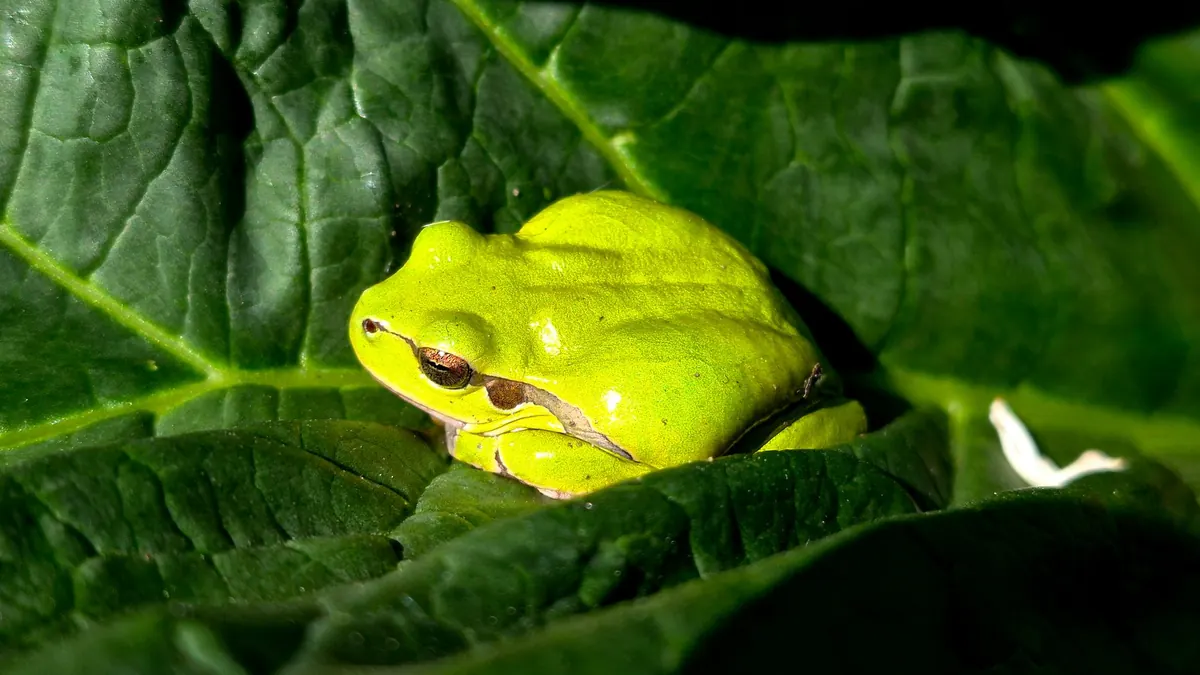
Stand at the edge of a shallow pan of water on a warm evening in late spring. Within a week of filling it, water boatmen appear, rowing in circles. A month later, a dragonfly claims a stem as a hunting perch. Frogs take longer, but they come — a chorus on a night you weren't expecting.
A backyard wetland doesn't need to be big. A pond two to three metres across, with gently sloping sides and a mix of native plants, will support frogs, dragonflies, damselflies, and a crowd of beetles, bees and other insects. What it needs is the right shape, clean water with no pesticide runoff, and patience while it settles in.
Choose a Site That Does Half the Work
Before you pick up a spade, watch your yard for a week. Where does rain pool and linger? Which corner gets sun from mid-morning to late afternoon? That low, sunny spot is your pond. Warm, light-filled water grows the algae and insects that feed everything else, and frogs need sun-warmed shallows to sit in.
Keep it away from large trees. Roots make digging miserable, and heavy leaf fall drops nutrients into the water that algae will happily consume. A few overhanging branches are fine and even useful, since dragonflies like perches and amphibians like cover, but a full canopy will keep the water too cold and dark.
Two checks before digging: call your local utility locating service so nobody cuts a gas or power line, and confirm the rules where you live. Setbacks from property lines, drainage easements, and homeowner association covenants all vary, and it's far cheaper to ask first than to fill a hole in later.
Design for Depth, Not Just Width
Depth is what turns a puddle into habitat. Frogs, dragonfly nymphs and other aquatic insects each use a different band of water, so build in three zones and blend them together with gentle slopes rather than a bucket-shaped hole.
- Shallow shelf (10–15 cm deep): the most important zone. Emergent plants root here, dragonflies lay eggs here, and frogs and birds use it as a bathing and drinking edge. Make at least a third of the pond this shallow.
- Middle zone (30–45 cm): a transition band for submerged plants and the hunting ground for dragonfly nymphs.
- Deep zone (60–90 cm): refuge. This is where frogs and insects retreat in hot, dry weather and where they spend the winter in cold climates. If your winters are hard, go deeper so the pond does not freeze solid.
Give the pond an irregular outline. Straight lines look artificial and offer less edge, and edge is where the life is. Add at least one gently sloped "beach" so hedgehogs, birds and small mammals can climb out, and place a piece of log or a stack of flat stones in the water as an escape ramp for anything that falls in.
Build It in a Weekend
- Mark the outline with a rope or garden hose, then adjust it until it looks like something a river left behind.
- Dig in shelves, not walls. Set the shallow shelf first, then step down. Keep the excavated soil nearby to build up the beach and to hide the liner edge.
- Remove roots, sharp stones and anything that could puncture the liner. Line the hole with a soft underlayment — geotextile or old carpet works — then lay the pond liner over it, letting it sag into the shape rather than stretching it tight.
- Tuck and weight the edges with soil and stones, folding the liner so rain runs in rather than underneath. Leave a low point on one side as an overflow so heavy rain has somewhere to go.
- Fill with water. Rainwater from a butt is ideal. If you use tap water and it is chlorinated, let it stand for a few days or treat it before planting; chloramine does not off-gas, so a dechlorinator is the safer route if that is what your supply contains.
- Wait a few days, then plant. Then do almost nothing for a month.
Plant Native, Plant in Layers
Plants do the filtration, the sheltering and the oxygenating, so choose species that already belong in your region and buy from a nursery that sells local stock. Never dig plants from a wild wetland — it damages the site and can carry invasive seeds and fragments home with you.
Cover all three zones:
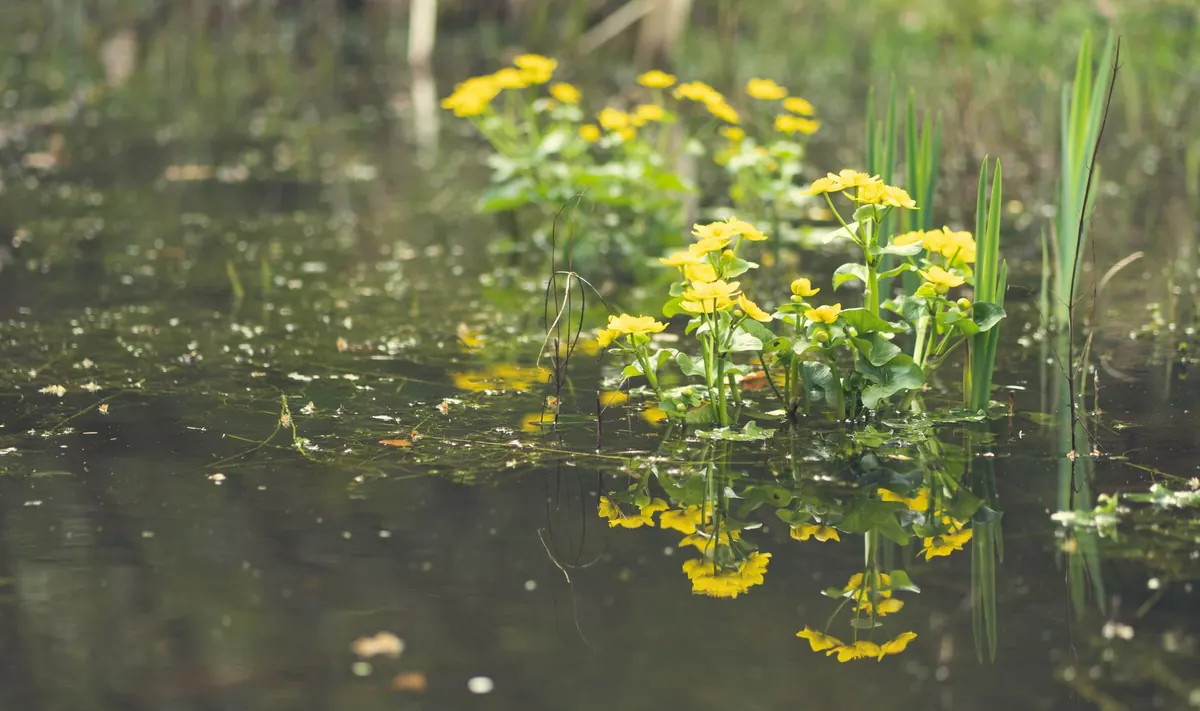
- Emergent plants in the shallows: pickerelweed, blue flag iris, arrowhead, soft rush, sedges.
- Boggy margin species where the soil stays damp: swamp milkweed, cardinal flower, joe-pye weed, boneset, blue vervain.
- Submerged plants in the middle zone: hornwort or a native pondweed, if those grow wild near you.
Leave gaps. Bare water reflects light and gives dragonflies room to patrol, and tubs planted edge to edge become a bog rather than a pond.
Then guard against the thugs. Purple loosestrife, yellow flag iris, parrot's feather, water hyacinth and Eurasian watermilfoil spread aggressively and escape from garden ponds into real wetlands. Check your regional invasive species list before buying anything, and be sceptical of mixed "pond plant" collections sold online.
Skip the Fish, Skip the Feed
Goldfish and koi are the fastest way to empty a wildlife pond. They eat tadpoles, dragonfly nymphs and almost everything else, and they stir sediment into the water. Leave fish out entirely, and don't move frogspawn, tadpoles or plants in from another pond — you can carry disease and invasive species with them, and in many places moving amphibians is regulated.
Mosquitoes rarely become a problem in a pond that has been left to find its own balance, because dragonfly nymphs, diving beetles, backswimmers and tadpoles all eat the larvae. Keep the water free of rotting vegetation and lawn fertiliser, and add a little movement with a small solar pump if you want extra insurance. Where mosquitoes are a genuine nuisance, a bacterial larvicide sold for mosquito control targets the larvae without harming dragonflies or frogs.
Feed nothing, spray nothing near the water, and let the pond feed itself.
Keep It Running Through the Year
Expect green water in the first spring. That bloom fades as plants take up nutrients and shading develops. Resist emptying and scrubbing the pond; you would be throwing away the very community you are trying to build.
In spring, cut back some of last year's stems but leave a third standing — insects overwinter inside them. Through summer, top up the water in dry spells and thin plants that are smothering the open water. In autumn, net out excess leaves if they blanket the bottom, but leave a thin layer; it is food and cover. In winter, don't smash ice with a hammer, since the shock can injure animals resting below. A pan of hot water set on the surface will melt a hole gently if you want one.
Start Small and Let It Grow In
The first year, a new pond usually looks like a muddy puddle and you will wonder whether it worked. Give it three seasons. Native plants fill out, insects arrive, and the frogs and dragonflies find it without any help from you — they are better at locating new water than we are at advertising it. Dig it, plant it, walk away, and then sit down at dusk and watch what shows up.
Photo: Anita Dombi / Pexels